2025
Refreshed for Sri Lanka
Tikiri launches a refreshed product range for the Sri Lankan market — bringing world-class GOLS-certified organic baby toys home, for the parents who deserve to know their island made them.
What GOLS Actually Means — In Plain Language
Certifications can feel abstract. A logo on a label, a line of text on a website. So let's make this concrete — what did Tikiri Toys actually have to prove to earn GOLS certification?
GOLS is administered by Control Union Certifications, one of the largest and most respected independent certification bodies in the world. To earn and maintain the accreditation, Tikiri meets all of the following criteria — and is audited annually to ensure they remain compliant.
95% Certified Organic Latex
The finished toy must contain more than 95% certified organic raw material. Not just "natural" rubber — provably organic, from plantation to product.
Strict Chemical Limits
Products must not exceed allowable limits for emission testing, polymer percentages, filler percentages, and harmful substances — verified by independent laboratory testing.
Full Supply Chain Traceability
GOLS issues transaction certificates at every stage — plantation, manufacturer, and retailer. Every batch of rubber used by Tikiri can be traced back to its organic source.
Social & Environmental Standards
Fair employment, safe working conditions, responsible waste management, and eco-friendly practices must be upheld at every level of the supply chain — not just in the product itself.
Annual Independent Audits
This is not a one-time award. Control Union audits Tikiri every year to ensure continued compliance. The certification must be re-earned, not simply held.
GOLS-Approved Manufacturing
The manufacturing facility itself must meet GOLS standards — not just the raw material. The way the toy is made is as important as what it's made from.
What This Means for Parents in Sri Lanka
As parents in Sri Lanka, we navigate a unique mix of deep love for natural, traditional remedies and a growing awareness of what's actually in the modern products we bring into our homes. We've always known that natural is better — coconut oil over lotion, home-cooked over processed, fresh over packaged. We apply that same instinct to our children.
But when it comes to baby toys, "natural" has become a marketing word. Walk through any supermarket or browse any online store, and you'll find toys labelled "natural," "eco-friendly," and "non-toxic" with no independent body verifying any of it. As parents, we're left to trust the packaging.
GOLS changes that. When you see the GOLS mark on a Tikiri toy, you're not trusting a claim. You're trusting a standard — one that was independently verified, annually audited, and so rigorous that no other baby toy brand in the world had met it before Tikiri did.
What GOLS certification means for your baby, practically speaking:
-
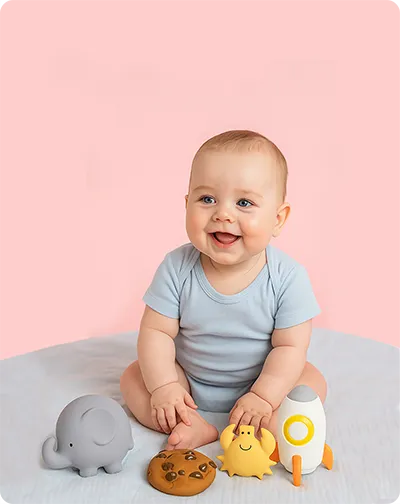
No hidden chemicals in what your baby chews. Every rubber teether, rattle, and bath toy is made from latex that has been independently verified to contain no harmful chemical residues — not BPA, not phthalates, not PVC, not heavy metal dyes.
-
The "organic" claim is proven, not printed. Unlike the word "natural," GOLS certification requires laboratory testing and third-party inspection. It cannot be self-declared by a brand.
-
You can trace where the rubber came from. GOLS requires transaction certificates at every stage of the supply chain. The rubber in a Tikiri toy is traceable back to its organic plantation in Sri Lanka.
-
The toy is environmentally responsible, not just safe. GOLS covers social and environmental standards too — meaning fair wages for the workers who made it, responsible waste practices, and eco-friendly production methods.
-
The certification is renewed every year. You're not relying on a badge earned years ago and never revisited. Tikiri is re-audited annually — the standard must be maintained, not just achieved once.
A Sri Lankan Brand That Changed a Global Standard
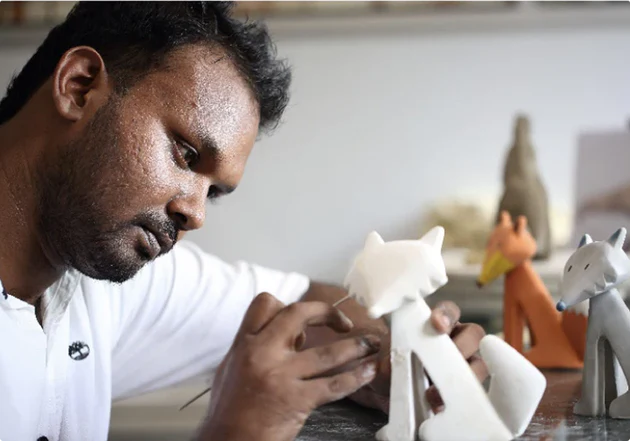
There's something we don't talk about enough in Sri Lanka — the extraordinary quality of what we make here. We tend to export brilliance quietly. Our rubber is some of the finest in the world. Our craftspeople are skilled in ways that can't be replicated by a machine. Our commitment to ethical, sustainable manufacturing has quietly built an industry that is now recognised on five continents.
Tikiri Toys is a perfect expression of all of that. It was born here. It sources its core material here. It employs its people here. It was designed here. And when the world needed a new standard for safe, organic baby toys, it was a Sri Lankan brand that stepped up and made it happen.
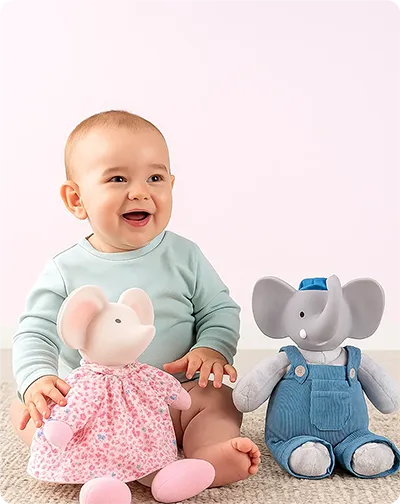
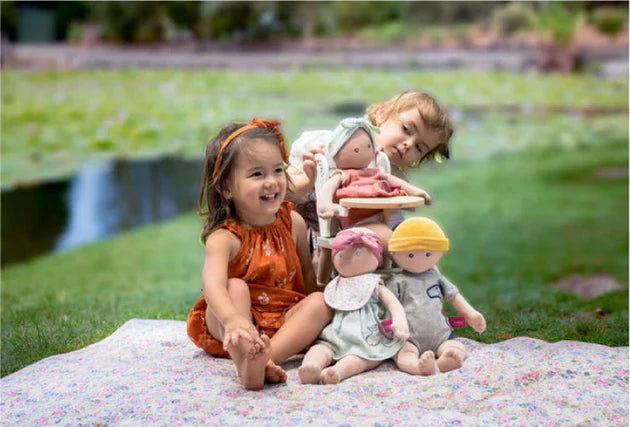
The Meiya & Alvin collection is sold in over 56 countries. The Bonikka rag doll collection is described internationally as a phenomenon. DSL Lanka has won the Presidential Export Award multiple times and the Most Ethical Gift award at the UK's NEC Spring Fair. Nearly 2 million Tikiri toys have been shipped in a single year, contributing meaningfully to Sri Lanka's GDP.
And now, with the refreshed Tikiri range available in Sri Lanka, parents here at home can finally hold the very toys that are trusted by families in London, New York, Tokyo, and Sydney — knowing they were made with love, a short drive away, to a standard that no one else in the world has matched.
GOLS is Just One Part of the Picture
As remarkable as the GOLS certification is, it's worth knowing that Tikiri Toys doesn't stop there. The brand's commitment to safety, ethics, and sustainability runs across every single material and process:
GOTS — Global Organic Textile Standard
All fabric components — the plush, the cotton filling, the soft outer layers of comforter toys — are made using GOTS-certified organic cotton. GOTS is to fabrics what GOLS is to rubber: the world's most respected certification for organic textile processing.
OCS 100 & GRS Certified
Tikiri's stuffing uses material reclaimed from recycled plastic bottles — a creative, sustainable choice that also reduces the risk of mould (wet natural fillings are prone to it). The OCS 100 (Organic Content Standard) and GRS (Global Recycled Standard) certifications verify the organic and recycled content independently.
SEDEX & BSCI — Ethical Working Conditions
SEDEX and BSCI are international standards for ethical supply chains and fair working conditions. Tikiri's factories are certified under both — meaning the people who make these toys are treated with the same care that goes into making them.
Hand-Painted with Plant-Based Dyes
Every colour you see on a Tikiri rubber toy has been applied by hand, using plant-based, non-toxic dyes. No heavy metals. No synthetic colourants. Just safe, beautiful, hand-painted play.
Recycled Packaging
Even the box your Tikiri toy arrives in is made from recycled board, printed with soy-based inks. The commitment to the environment doesn't stop when the toy is finished.
The Simplest Reason to Choose Tikiri
As parents, we spend a lot of time second-guessing ourselves. Did I choose the right formula? Is this sleeping position okay? Should I be worried about that ingredient? The mental load of keeping a tiny human safe is enormous — and it doesn't need to be made heavier by uncertainty about the toys in their hands and mouths.
Tikiri Toys exists to remove that uncertainty. Every toy is made from organic rubber that can be traced back to a certified organic plantation in Sri Lanka. Every fabric component is GOTS certified. Every product is audited independently, every year, against the world's most rigorous standards. And it all happens a short drive from Colombo, by skilled Sri Lankan hands that have been doing this since 1991.
The GOLS certification isn't a marketing point. It's proof. And it was earned — for the first time, by any baby toy brand anywhere in the world — right here in Sri Lanka.
That's something worth knowing. And worth celebrating.