Everything You Need to Know About Organic Natural Rubber Baby Toys
Everything You Need to Know About Organic Natural Rubber Baby Toys
From Sri Lanka's rubber plantations to your baby's hands — discover why organic natural rubber is the safest, most eco-friendly material for the toys your little one plays with every day.
When you become a parent, you start reading ingredient labels on everything. Nappies, skincare, food — and yes, toys. Because your baby doesn't just play with toys. They chew them, squeeze them, mouth them, sleep with them, and drag them through the bath. What those toys are made of matters more than most parents initially realise.
Organic natural rubber has quietly become one of the most trusted materials for baby toys around the world — and Sri Lanka sits at the very heart of this story. In this guide, we'll walk you through everything you need to know: what organic natural rubber actually is, how it's harvested right here in Sri Lanka, why it's safer than plastic or silicone, what certifications to look for, and how to choose the right rubber toy for your baby's stage of development.
By the end, you'll know exactly what to look for — and what to avoid.
What Is Organic Natural Rubber?
Natural rubber, also known as latex, is a milky white sap that comes from the Hevea brasiliensis tree — commonly called the rubber tree. When a skilled tapper makes a careful incision in the bark, the sap flows out naturally, without harming the tree. It's one of the most elegant examples of a truly renewable resource on earth.
But not all natural rubber is the same.
Conventional natural rubber is harvested from rubber trees that may have been treated with synthetic fertilisers, pesticides, and chemical accelerants during the manufacturing process. These additives help speed up production, but they leave chemical residues behind — residues that can end up in direct contact with your baby's mouth.
Organic natural rubber is different. It comes from trees grown on certified organic plantations — no synthetic chemicals, no pesticides, no harmful fertilisers. The manufacturing process is also tightly controlled, limiting the additives that can be used to process the latex into a finished product.
For babies — whose immune systems are still developing and who explore the world primarily through their mouths — this distinction is not a marketing point. It's a genuine safety difference.
For babies who explore the world primarily through their mouths, the difference between conventional and organic rubber is not a marketing point — it's a genuine safety decision.
How Natural Rubber Is Harvested in Sri Lanka
Sri Lanka has one of the oldest and most respected rubber industries in the world. Rubber cultivation began here in 1883 and expanded rapidly across the island's wet zone districts, where the tropical climate provides ideal conditions for rubber tree growth. Today, Sri Lanka is recognised globally as a producer of some of the finest quality natural rubber available anywhere — with nearly 200,000 people employed in the industry, approximately 40% of whom are women.
The harvesting process — called rubber tapping — is a skilled, generations-old craft. Tappers use a curved Jori knife to make precise, angled incisions in the bark of mature rubber trees. The cut is made at exactly 30 degrees, carefully removing just a thin layer of bark to access the latex vessels beneath, without damaging the tree's growth layer. The latex then flows slowly down the cut and into collection cups placed at the base.
A sustainable tapping system — known as the 1/2S d/3 method — taps only half the tree's circumference every three days. This gives the tree time to recover and replenish its latex-producing tissues, ensuring the same tree can produce for 25 to 30 years before being retired.
At Tikiri Toys, our organic rubber is sourced from Sri Lanka's own certified organic plantations — so the journey from rubber tree to your baby's hands stays as short, traceable, and ethical as possible.
🌿 Did You Know?Sri Lanka's rubber industry dates back to 1876 — making it one of the longest-running and most refined natural rubber industries in the world. The island's tropical wet zone climate is considered ideal for rubber tree cultivation, producing latex of exceptional purity and quality.
Why Organic Natural Rubber Is Safer for Babies
Babies are not small adults. Their bodies work fundamentally differently — organs are still forming, the blood-brain barrier is not fully developed, and the immune system is learning. Chemical exposures that might be inconsequential for an adult can have a disproportionate impact on a developing infant.
Here's what makes organic natural rubber stand out as a genuinely baby-safe material:
It Contains No BPA, PVC, or Phthalates
These are the three chemicals parents most commonly hear warnings about — and for good reason. BPA (Bisphenol A) is found in many hard plastics and is a known endocrine disruptor. Phthalates are plasticisers used to make PVC soft and flexible, and they've been linked to hormonal disruption in children. Organic natural rubber contains none of these.
It Is Biodegradable
When your baby eventually outgrows a rubber toy, it will naturally decompose and return to the earth. Compare this to plastic, which researchers estimate can take 400 years or more to break down — often fragmenting into microplastics that enter the food chain and waterways. An estimated 90% of plastic toys will end up in the ocean at some point. Choosing natural rubber is a small act with a genuinely significant environmental impact.
It's Naturally Mould-Resistant (When Solid)
One of the biggest hidden dangers in baby bath toys is mould. Many plastic and hollow rubber bath toys trap water inside, creating dark, moist environments where mould and bacteria thrive. Solid organic natural rubber toys eliminate this problem entirely — no holes, no hidden cavities, no mould.
It Has a Naturally Soft, Soothing Texture
Organic rubber is soft, slightly flexible, and warm to the touch — far more similar to natural textures than the hard, synthetic feel of plastic or the strangely cold smoothness of silicone. For teething babies, this texture gently massages sore gums in a way that feels instinctively comforting.
It Is Hypoallergenic When Properly Processed
Some parents worry about latex allergies. True latex allergies are relatively rare, and they are most often associated with poor-quality rubber products where allergy-triggering proteins haven't been properly processed. High-quality, GOLS-certified organic rubber undergoes rigorous processing controls that minimise these residual proteins, making them suitable for the vast majority of babies.
Organic vs Conventional vs Silicone vs Plastic: Side-by-Side
| Feature | Organic Natural Rubber | Conventional Rubber | Food-Grade Silicone | Plastic (BPA-free) |
|---|---|---|---|---|
| Source | Organic rubber tree sap | Rubber tree sap | Silicon + oxygen (synthetic) | Petroleum-based |
| Chemical-Free | ✅ GOLS verified | ⚠️ Variable | ✅ Food-grade safe | ⚠️ May contain other chemicals |
| Biodegradable | ✅ Yes | ✅ Yes | ❌ No | ❌ 400+ years |
| Teething Texture | ✅ Soft, warm, natural | ✅ Soft | ⚠️ Slightly synthetic feel | ❌ Hard, harsh on gums |
| Mould Risk (bath) | ✅ Low (solid toys) | ⚠️ Medium | ⚠️ Medium if hollow | ❌ High (trapped water) |
| Eco Credentials | ✅ Excellent | ⚠️ Moderate | ⚠️ Moderate | ❌ Poor |
| Certification | ✅ GOLS, GOTS | ❌ None specific | ⚠️ Food-grade testing | ⚠️ Variable |
| Supply chain traceability | ✅ Full | ❌ Often limited | ⚠️ Partial | ❌ Often limited |
Both organic natural rubber and food-grade silicone are genuinely safe choices. Organic rubber wins on biodegradability, natural texture, and full certification traceability.
Types of Organic Natural Rubber Baby Toys
One of the joys of organic rubber is how versatile it is as a material. At Tikiri, we use it across a full range of baby products.
Organic Rubber Teethers
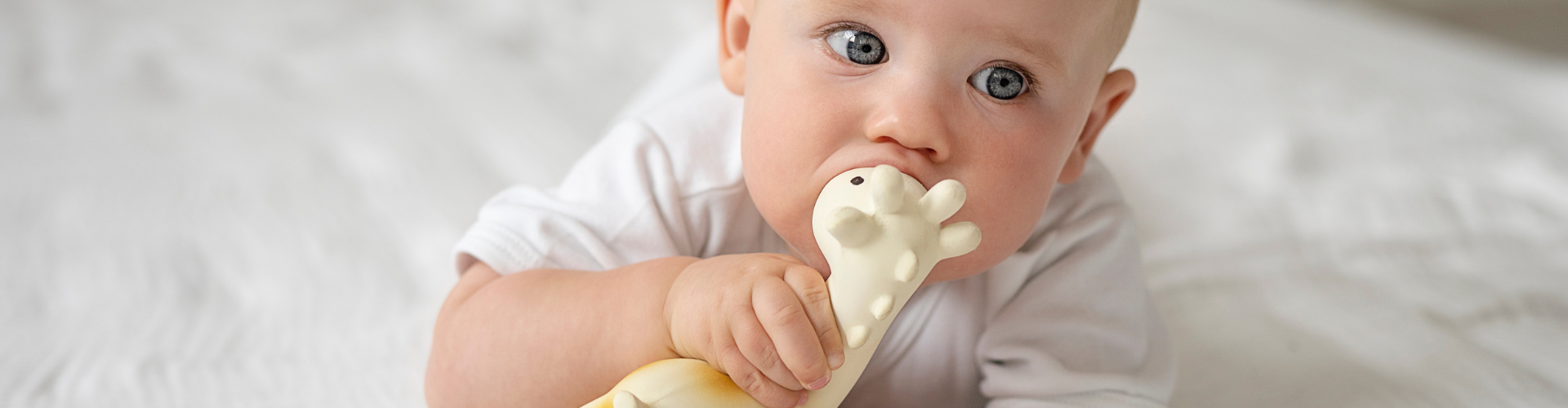
Soft, textured, and sized for little hands. Gently massage sore gums during the teething phase (typically 4–6 months) without hard edges or chemical risk.
Organic Rubber Rattles
Combine tactile comfort with gentle sound stimulation. Ideal for 3–9 months to develop cause-and-effect understanding, grip, and hand-eye coordination.
Organic Rubber Bath Toys
Solid — no holes, no hidden water, no mould. They float, they squeak gently, and they clean easily with warm water and mild soap.
Sensory Balls
Varied surface textures stimulate the nerve endings in babies' fingertips, supporting healthy tactile development and early motor milestones.
Rubber Comforters & Lovies
Combined with GOTS-certified organic plush, these give babies a safe, soft companion with a teether element for soothing and sensory comfort.
How Organic Rubber Toys Support Baby Development
Beyond safety, the material itself plays an active role in how babies learn and grow during their most critical developmental window.
Sensory Development
The soft, textured surface of organic rubber provides rich tactile input. Different textures — smooth, ridged, bumpy — stimulate different nerve pathways and build the sensory map that underlies all future learning.
Motor Development
Grasping, squeezing, and transferring a rubber toy all build fine motor control. The slight resistance of organic rubber is ideal — soft enough to be safe, firm enough to provide meaningful feedback to developing muscles.
Oral Motor Development
Mouthing is not a bad habit — it's how babies explore their world and develop the oral muscles they'll later use for speech. A non-toxic teether gives babies a healthy outlet for this entirely normal behaviour.
Emotional Security
Soft rubber comforters become objects of attachment — consistent, soothing presences that help babies self-regulate during transitions like sleep, travel, or separation from a caregiver.
Cognitive Development
When a baby shakes a rattle and hears a sound, or squeezes a toy and feels it resist, they're building early cause-and-effect understanding — one of the foundational cognitive skills of childhood.
Visual Development
The bright, natural colours of organic rubber toys — coloured with non-toxic, food-safe dyes — provide high-contrast visual stimulation that supports developing eyesight and attention in newborns and infants.
What to Look for When Buying Organic Rubber Baby Toys
Use this checklist when shopping to ensure you're buying a genuinely safe product — not just one that's marketed to look that way.
🛒 The Parent's Buying Checklist
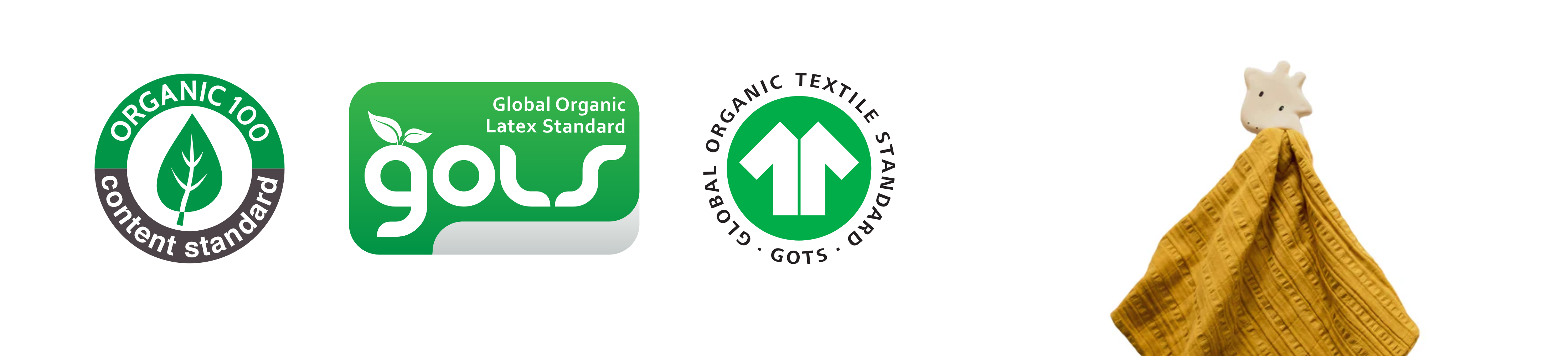
Look for GOLS certificationThis is the gold standard for organic rubber. If a toy claims to be "natural rubber" without GOLS, it may be conventional rubber with no independent verification.
Check for GOTS certification on any fabric elementsIf the toy has a plush or fabric component, that element should be GOTS certified to ensure the fabric is also free from chemical processing.
Confirm the toy is solid, not hollowSolid rubber toys don't trap water and are mould-safe for bath time use. Avoid toys with holes in the base.
Look for non-toxic, food-safe dyesThe colouring on the toy should be free from heavy metals and safe for oral contact, since your baby will almost certainly put it in their mouth.
Check age appropriatenessDifferent toys are designed for different developmental stages. A newborn needs a different toy to a teething 6-month-old. Always follow the manufacturer's age guidance.
Buy from brands with full supply chain transparencyYou should be able to find out where the rubber was grown, where the toy was made, and which certifying body verified the claims.
Be cautious of "natural" claims without certificationThe word "natural" has no legal definition in most markets. It can be used freely without any independent verification. Always look for a named third-party certification body.
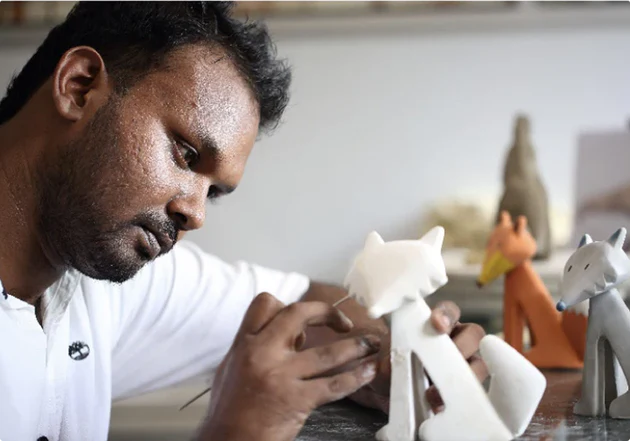
Tikiri Toys has been handcrafting organic rubber and plush toys in Sri Lanka since 1991 — and holds the world's first GOLS certification for baby toys. Every toy is a promise, independently verified.
Frequently Asked Questions
Natural rubber simply refers to rubber derived from rubber tree sap, as opposed to synthetic rubber made from petroleum. Organic natural rubber goes further — it comes from certified organic plantations with no synthetic pesticides or fertilisers, and is processed without harmful chemical additives. GOLS certification by Control Union independently verifies this across the entire supply chain.
For most babies, yes. Organic rubber is processed to minimise residual latex proteins, which are the component associated with latex sensitivity. If your baby has a known latex allergy or a family history of latex allergies, we recommend consulting your paediatrician before introducing rubber toys of any kind.
Yes. Organic rubber teethers and bath toys can be cleaned with warm water and mild, natural soap. Avoid boiling or dishwasher sterilisation as high heat can degrade the rubber over time. For a deeper clean, a diluted white vinegar solution works well. Always inspect toys before cleaning for any cracks or damage.
With proper care, organic rubber toys last well through the first two years of life. Over time, natural rubber can be affected by exposure to sunlight, extreme heat, and saliva. Inspect toys regularly and replace if you notice cracking, tearing, or significant discolouration — any structural change is a sign to retire the toy.
Many of our organic rubber toys are designed from birth. Always check the age guidance on each specific product, as different toys have different recommended age ranges based on size, shape, and developmental appropriateness. Our product pages clearly indicate the minimum age for each toy.
Sri Lanka is one of the world's finest natural rubber producers, with a rubber industry dating back to 1883. Making our toys here means our organic rubber travels the shortest possible distance from plantation to production — supporting full traceability, sustainability, and the livelihoods of Sri Lankan communities. We have been handcrafting in Sri Lanka since 1991, and every toy is made by hand with care.